
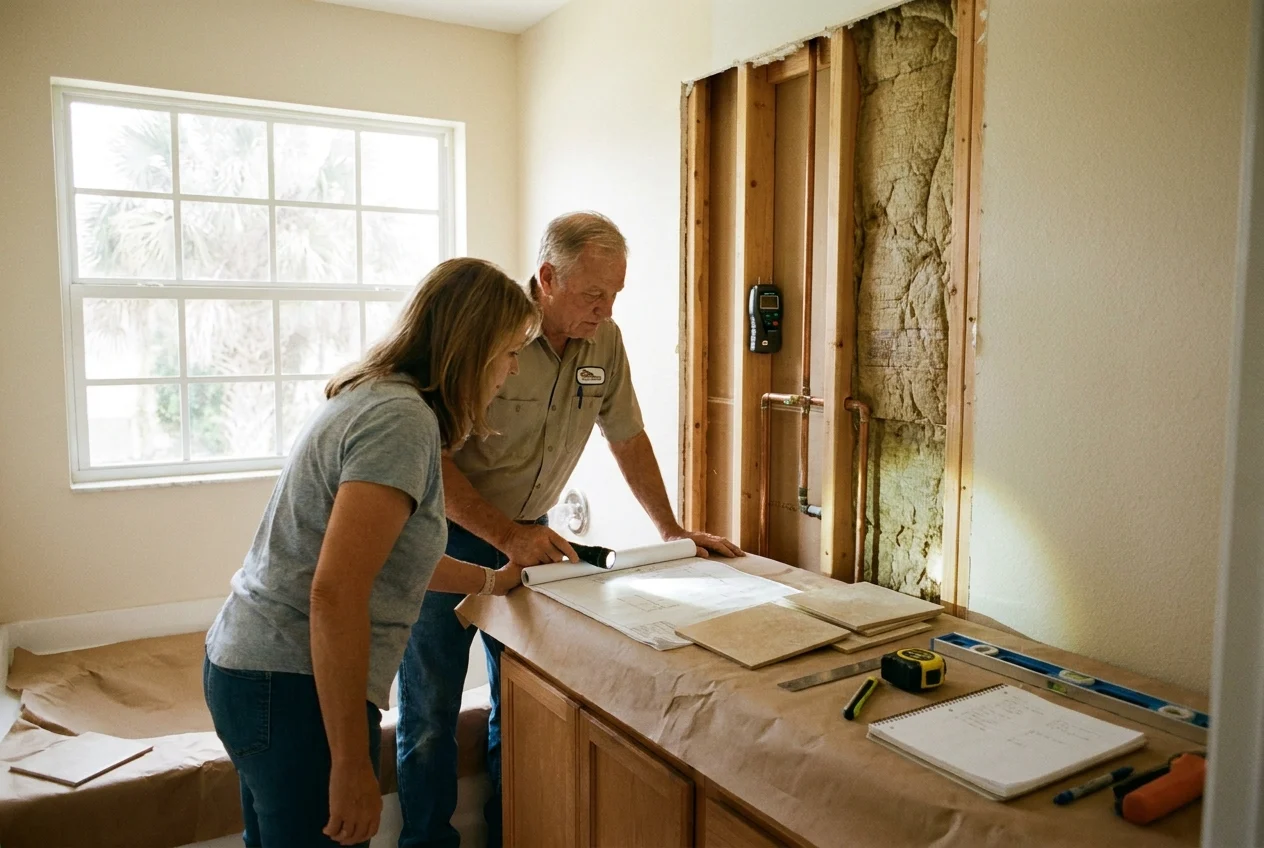
A successful bathroom remodel in Southwest Florida requires more than selecting attractive tile, fixtures, and finishes. Persistent humidity, seasonal heat, heavy rainfall, and frequent moisture exposure can affect walls, flooring, cabinetry, ventilation systems, and hidden structural materials.
Homeowners in Port Charlotte, Punta Gorda, North Port, and surrounding Charlotte County communities should evaluate how moisture moves through the room before making design decisions.
Begin With a Thorough Moisture and Condition Assessment
Before developing the layout or choosing finishes, inspect the existing bathroom for signs of moisture damage. Common warning signs include musty odors, stained drywall, soft flooring, loose tile, deteriorated grout, bubbling paint, rusted hardware, and discoloration near tubs, showers, toilets, or vanities.
Covering damaged materials with new finishes can allow the underlying problem to continue. During a bathroom renovation, affected areas may need to be opened so the framing, subfloor, plumbing connections, and insulation can be evaluated.
Evaluate the Bathroom’s Existing Ventilation
Florida bathrooms need mechanical ventilation that removes humid air effectively rather than merely circulating it. An undersized, noisy, or poorly maintained exhaust fan may not keep up with steam from showers and baths.
The location of the fan also matters. It should capture moisture near the primary source without conflicting with shower safety requirements or other fixtures. A timer, humidity sensing control, or extended run setting can help the fan continue operating after bathing, when significant moisture often remains on walls and ceilings.
Check Plumbing, Drainage, and Structural Surfaces
A remodel provides an opportunity to inspect supply lines, shutoff valves, drains, and fixture connections that may otherwise remain concealed. Older or corroded components can increase the risk of leaks after new finishes are installed.
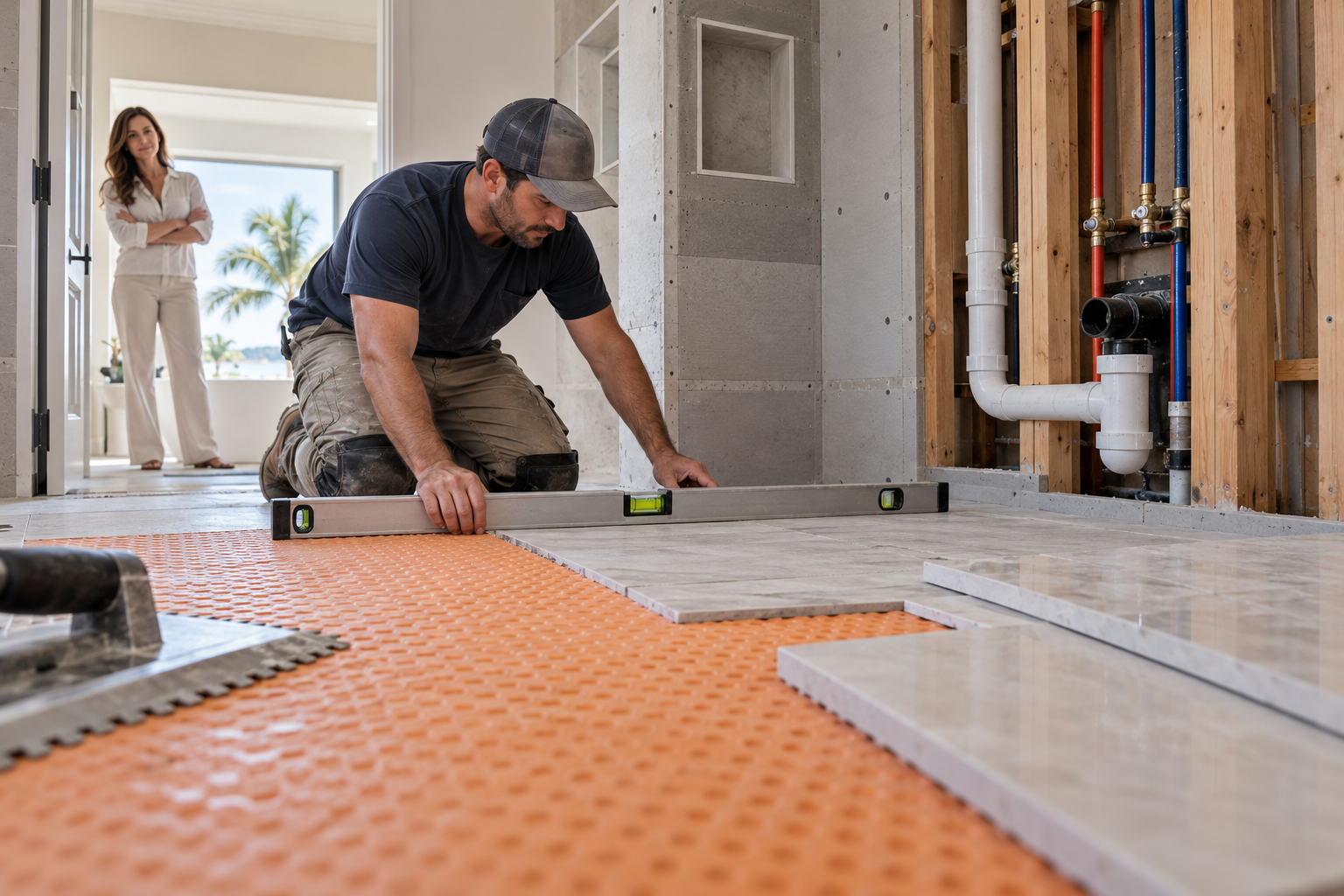
The subfloor and wall framing must also be sound, level, and suitable for the intended finish materials. Tile and stone require stable substrates because movement can lead to cracked grout, loose tiles, and failed waterproofing.
Select Materials That Can Handle Heat and Humidity
Bathroom materials should be chosen for their performance in damp conditions, not only for their appearance. Products that work well in a dry climate may swell, separate, corrode, or develop mildew in Southwest Florida.
Even moisture resistant products can fail when installed incorrectly. Seams, corners, penetrations, transitions, and fixture connections are especially vulnerable. A durable bathroom depends on a complete system in which the substrate, waterproofing, adhesives, grout, sealants, and finish materials are compatible and installed according to manufacturer instructions.
Prioritize Waterproofing Behind Showers and Tubs
Tile and grout are not substitutes for a properly installed waterproofing system. Shower walls, niches, benches, curbs, and floors need continuous protection beneath the visible surface.
Cement based backer boards may resist deterioration better than standard drywall, but they are not automatically waterproof. Depending on the selected assembly, a compatible surface applied membrane or sheet membrane may be required.
Choose Stable Flooring, Cabinetry, and Wall Finishes
Porcelain tile is a popular bathroom flooring option because it has low water absorption and is available in many styles. Textured or matte surfaces can provide better traction than highly polished finishes, which is particularly important around showers and tubs.
For vanities and storage, plywood construction, sealed wood, or other moisture tolerant materials generally perform better than low grade particleboard exposed to repeated humidity. Cabinet edges, sink cutouts, and plumbing openings should be sealed carefully.
Design the Layout to Improve Airflow and Daily Function
A bathroom layout should support comfortable movement while allowing humid air to reach the exhaust fan. Tall cabinets, enclosed shower walls, and tightly separated bathing areas can create pockets where moisture lingers.
Layout changes should also account for plumbing locations, structural walls, door clearances, storage needs, and safe access. Moving fixtures can improve function, but it may require slab cutting, drain relocation, electrical modifications, or changes to plumbing vents.
Plan Showers for Effective Drainage
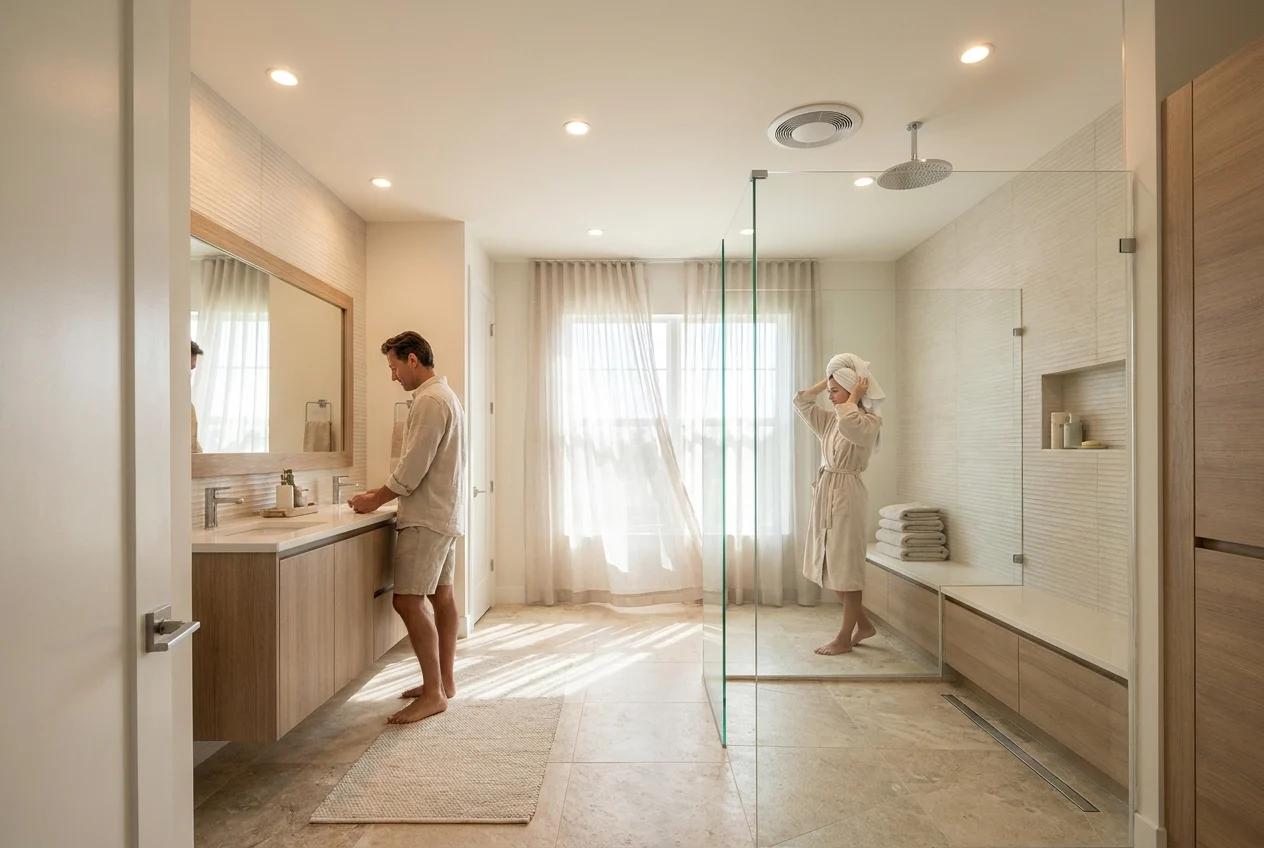
A shower floor must slope consistently toward the drain without creating low areas where water can collect. The drain location, waterproofing method, tile size, and floor slope should be coordinated as one system.
Curbless showers can create a clean appearance and improve accessibility, but they require careful planning. The floor may need to be recessed or modified to provide the necessary slope while keeping water inside the shower area.
Provide Practical Storage Without Trapping Moisture
Recessed niches, vanity drawers, medicine cabinets, and linen storage can reduce countertop clutter, but their locations should not compromise waterproofing or ventilation. Shower niches require proper slope and membrane detailing so water drains instead of collecting along the bottom edge.
Cabinetry should have enough clearance from showers, tubs, and toilets to reduce frequent splashing. Adequate space beneath or around a vanity can also make cleaning easier.
Control Humidity With a Complete Ventilation Strategy
An exhaust fan is most effective when it is part of a broader moisture control plan. Bathroom doors need enough clearance or another source of replacement air so the fan can pull humid air out of the room.
Duct design also affects performance. Long runs, sharp bends, crushed flexible ductwork, and restrictive exterior caps can reduce airflow. Smooth, properly sized ductwork with a direct route to the exterior generally performs more efficiently.
Do Not Rely on an Open Window Alone
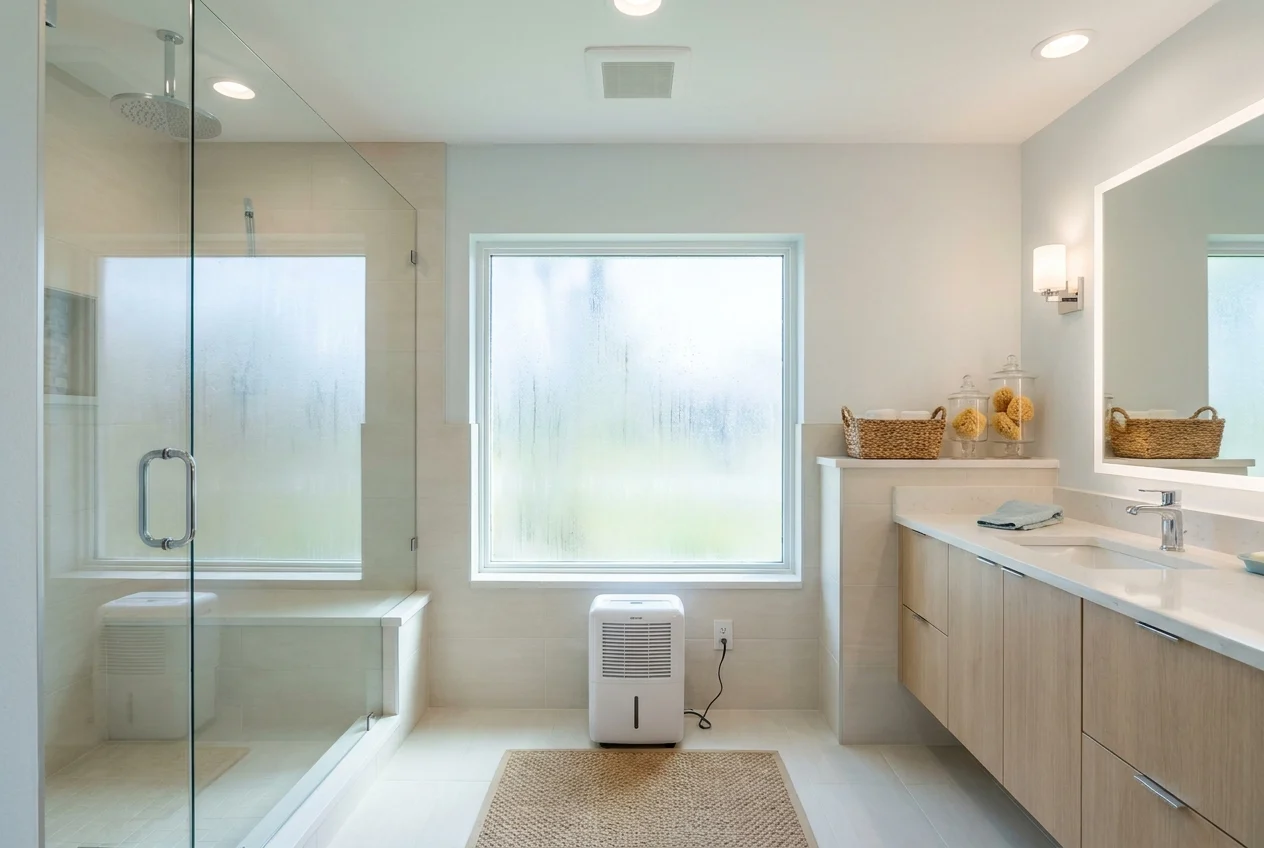
Windows can provide natural light and occasional airflow, but outdoor air in Southwest Florida is often humid. Opening a window may not remove moisture effectively, especially during summer afternoons, rainy periods, or calm weather.
If a bathroom window is located near a tub or shower, privacy, water exposure, tempered safety glass requirements, and the durability of the frame and trim should be reviewed.
Coordinate Bathroom Ventilation With the Home’s HVAC System
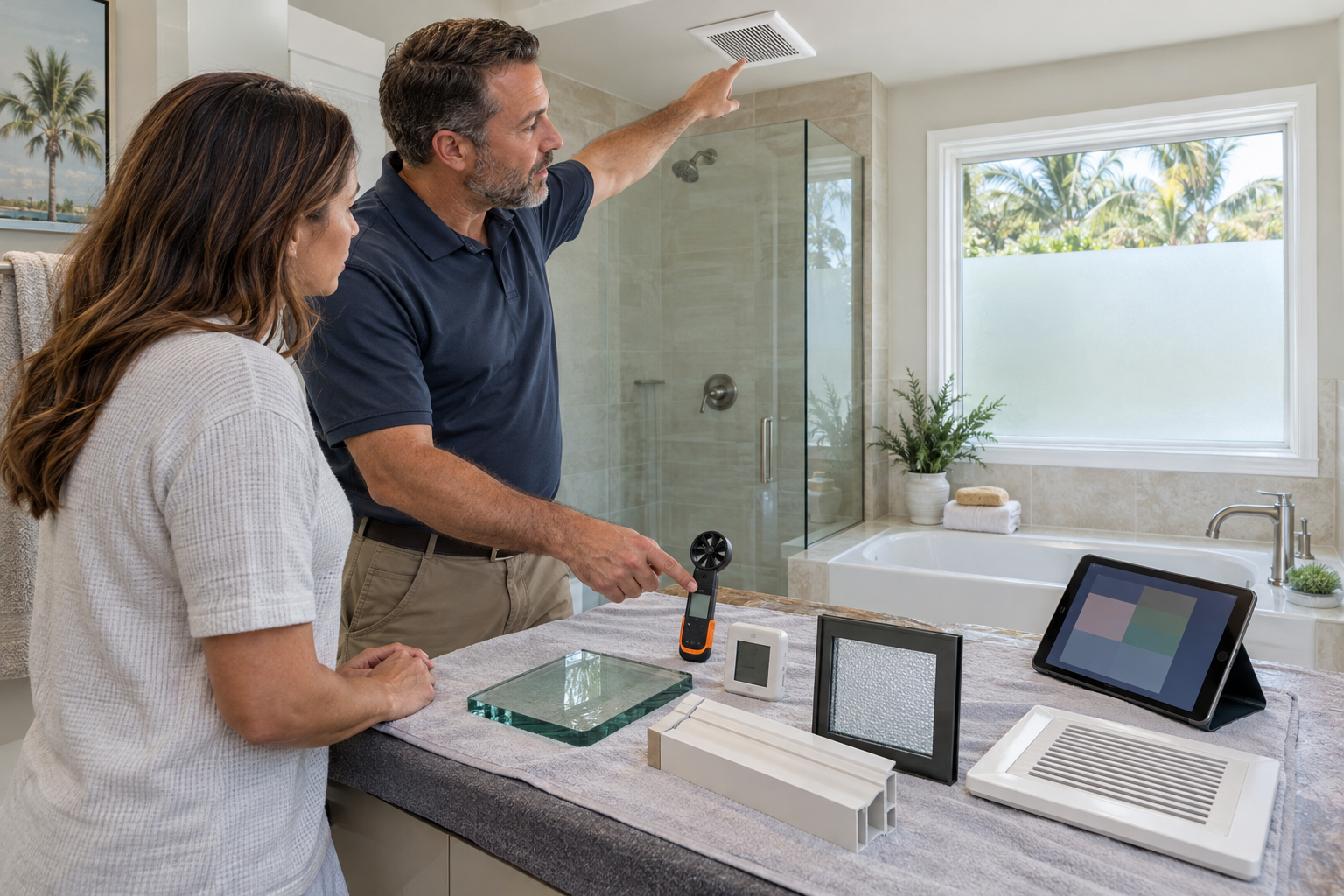
The bathroom’s supply air, exhaust capacity, and indoor temperature all influence drying. A room that remains unusually warm or receives little conditioned air may stay damp longer after use.
Persistent condensation on vents, walls, mirrors, or toilet tanks may indicate a broader indoor humidity issue rather than a bathroom finish problem alone. In that situation, the home’s HVAC performance, ductwork, air sealing, and humidity levels may need professional evaluation before or during the remodel.
Plan Electrical, Lighting, and Fixture Safety Carefully
Bathrooms combine electricity and water in a compact space, making code-compliant electrical work essential. Receptacles, lighting, switches, exhaust fans, and heated accessories must be placed and protected appropriately.
A remodeling plan should account for current and future electrical demand. Hair dryers, grooming tools, bidet seats, illuminated mirrors, towel warmers, and upgraded ventilation controls may require additional circuits or dedicated power.
Use Layered Lighting for Safety and Comfort
A practical lighting plan typically combines general illumination, task lighting, and shower-rated lighting where needed. Fixtures near mirrors should illuminate the face evenly without creating harsh shadows.
Fixtures installed in wet or damp locations should carry the appropriate rating for that location. High-humidity conditions can damage unsuitable finishes and electrical components over time.
Select Fixtures That Support Water Efficiency and Maintenance
Faucets, toilets, shower valves, and showerheads should be selected before rough plumbing is finalized. Different products may require specific valve bodies, mounting depths, drain locations, or water pressure conditions.
Water-efficient fixtures can reduce household consumption, but performance and serviceability also matter. Homeowners should consider whether replacement cartridges and internal parts are readily available. Accessible shutoff valves and plumbing connections make future repairs easier and can reduce damage if a leak develops.
Account for Florida Building Codes and Permitting
The permit requirements for a bathroom remodel depend on the scope of work and the local jurisdiction. Cosmetic updates may differ from projects involving plumbing relocation, electrical changes, structural modifications, window replacement, or changes to ventilation.
Permits and inspections help verify that concealed work meets applicable standards before it is covered. This is especially important for shower waterproofing, plumbing, electrical systems, framing, and structural changes.
Consider Hurricane and Wind Exposure
Bathroom windows and exterior doors should be evaluated as part of the home’s overall storm protection strategy. When these openings are replaced, the selected products and installation method may need to meet applicable wind pressure, impact protection, fastening, and product approval requirements.
A window upgrade is only as reliable as the surrounding opening preparation and water management. Proper flashing, sealants, fasteners, and exterior integration help protect against wind-driven rain.
Preserve Access to Valves and Serviceable Components
Building a clean, finished space should not make essential equipment impossible to service. Tub motors, plumbing valves, shutoffs, drain connections, and certain electrical components may require access panels.
Planning access before installation reduces the likelihood that tile or drywall will need to be removed during a future repair. It also allows leaks and mechanical problems to be addressed more quickly.
Create a Realistic Remodeling Budget and Schedule
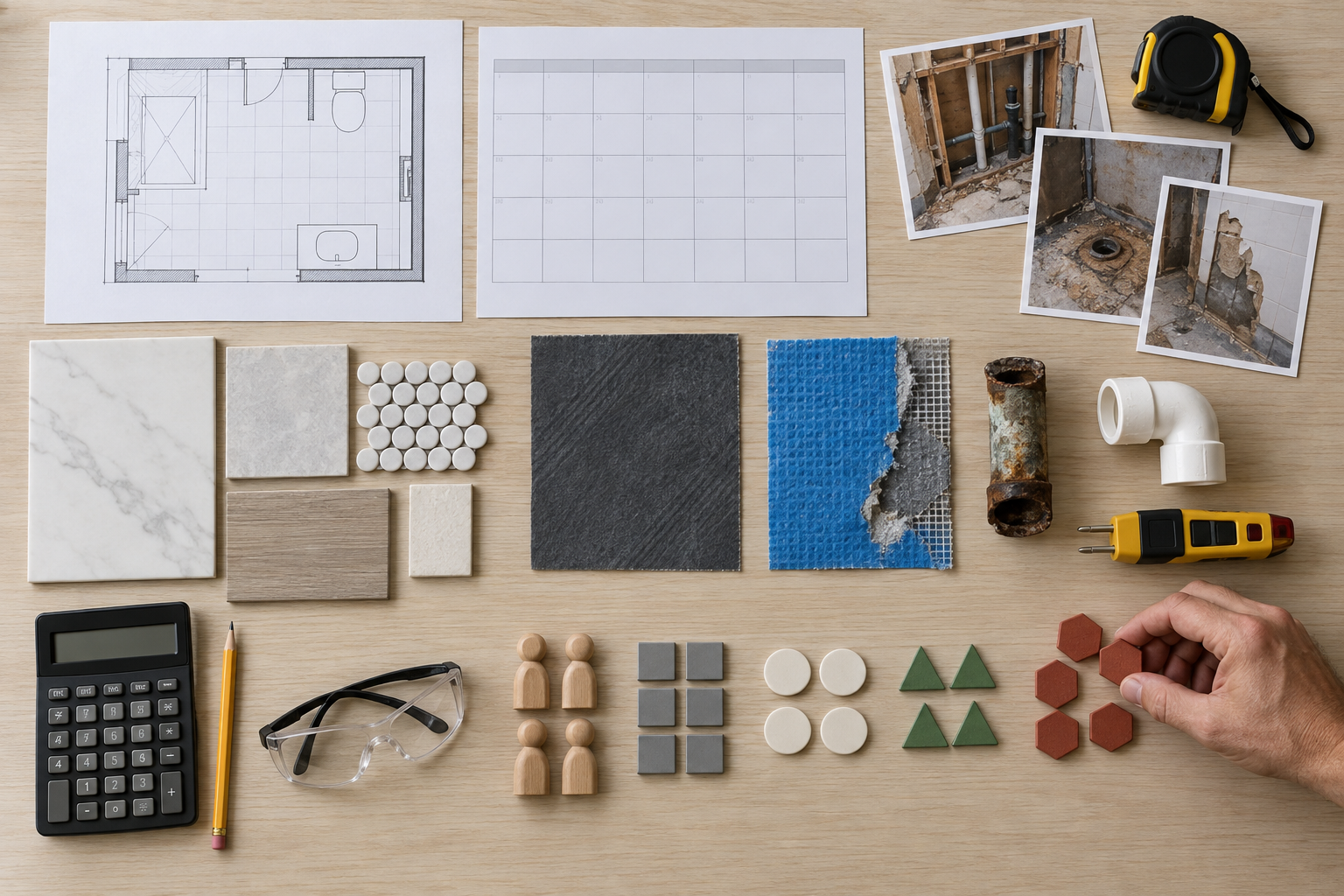
A bathroom remodeling budget should include more than visible finishes. Demolition, disposal, permits, design work, plumbing, electrical work, waterproofing, ventilation, substrate repair, painting, and final inspections can represent a significant portion of the total cost.
It is also wise to reserve a contingency for concealed damage. Rot, corroded plumbing, slab issues, outdated wiring, or failed waterproofing may not be visible until demolition begins.
Order Critical Materials Before Demolition
Tile, cabinetry, shower glass, specialty fixtures, and custom countertops may have extended lead times. Confirming dimensions, availability, compatibility, and delivery schedules before demolition can reduce delays.
A detailed project sequence helps coordinate demolition, rough plumbing, electrical work, inspections, waterproofing, tile installation, cabinetry, countertops, painting, fixtures, and shower glass. Some stages require curing or drying time that should not be shortened, particularly waterproofing, mortar, grout, and sealants.
Document Product and Maintenance Information
Keep permits, inspection records, product specifications, warranties, paint colors, tile details, and spare materials after the remodel. This information can simplify maintenance and future repairs.
Protect the Finished Bathroom Through Routine Maintenance
Even a well-built bathroom needs regular care in Florida’s humid climate. Run the exhaust fan during bathing and long enough afterward to clear lingering moisture.
Grout, natural stone, and other finishes should be maintained according to manufacturer recommendations. Harsh or incompatible cleaners can damage sealers, metal finishes, waterproof flooring, and grout.
Build Moisture Management Into Every Decision
A durable Florida bathroom depends on coordinated planning from the structure outward. Sound substrates, complete waterproofing, effective ventilation, appropriate materials, safe electrical work, and code-compliant installation must work together.
By assessing existing conditions, defining the full scope, and allowing adequate time for proper installation, Southwest Florida homeowners can create bathrooms that remain functional, comfortable, and easier to maintain despite persistent heat and humidity.
Is your bathroom ready to withstand Southwest Florida’s humidity?
Contact TFL Development Corp for professional remodeling guidance.

